
Games, States, and Heroic politics.
There are many historical examples of governmental apparatuses forming out of practices that were not originally “politics” at all. They began as games, festivals, seasonal roles, ritualized performances, or temporary leadership positions: tools for coordination rather than domination.
Many of us still operate under the assumption that human social evolution follows a simple arc: egalitarian hunter-gatherers → toolmakers → farmers → cities → massive populations → rulers → oppression. That story is tidy, intuitive, and largely wrong.
When the experts actually examine the archaeological and anthropological record, their finding make clear that hierarchy often emerged from imaginative coordination, not brute force. To organize and motivate groups larger than roughly 150 individuals, humans leaned on their most powerful adaptation: imagination. Through shared games, rituals, stories, calendars, and public spectacles, communities created cooperation at scale. From those cooperative labor pools came monumental architecture, infrastructure, and eventually sometimes… hierarchy.
Crucially, these hierarchies were often experimental, situational, and reversible.
The Dawn of Everything Case Studies
Here are case studies used by The Davids in their book.
1. Maya Civilization
Dates: c. 2000 BCE – 1500 CE
Region: Southern Mexico, Guatemala, Belize, western Honduras
Ballgames were staged in central plazas and embedded directly into city planning, making them civic events rather than marginal entertainment.
Early rulers appear first as hosts, referees, or interpreters of games—not distant monarchs issuing decrees. Authority emerged through visible participation and coordination.
Control of time: calendars, astronomy, and scheduling transformed repeated spectacle into lasting legitimacy, allowing elites to monopolize esoteric knowledge.
Archaeology suggests ballgames predate hardened dynastic states; over time, charismatic leadership crystallized into hereditary rule.
Notebook takeaway:
Game → calendar → dynasty
Public play created political gravity before permanent states existed.
2. Cahokia
Dates: c. 1050–1350 CE
Region: Mississippi River Valley, North America
Large public games such as chunkey synchronized vast populations across open plazas.
Authority appears to have been seasonal and situational at first—organizers, mediators, coordinators rather than permanent rulers.
Over time, elites monopolized cosmological alignment, mound space, and ritual authority.
When hierarchy hardened and exit remained possible, people dispersed. Cahokia was abandoned rather than conquered.
Notebook takeaway:
Coordination became control.
3. Olmec Civilization
Dates: c. 1500–400 BCE
Region: Gulf Coast of Mexico (modern Veracruz and Tabasco)
Large civic-ceremonial centers were organized around open plazas, indicating mass gatherings and spectacle before formal state bureaucracy.
Early ballcourts appear alongside elite architecture, embedding games directly within political space.
Colossal stone heads likely depict specific heroic individuals, emphasizing charisma and presence over abstract office.
Control of iconography, jade exchange, and symbolic systems allowed spectacle organizers to convert participation into lasting authority.
Notebook takeaway:
Heroic performance came before permanent political office.
4. Minoan Civilization
Dates: c. 3000–1450 BCE
Region: Island of Crete
Palatial centers such as Knossos were organized around large open courtyards designed for mass viewing of athletic and performative events, not throne rooms.
Bull-leaping and related spectacles emphasized skill, coordination, and risk, creating legitimacy through performance rather than coercion.
Elites translated repeated spectacle into administrative and economic control through trade networks, calendars, and symbolic knowledge.
When authority over-hardened or external pressures increased, palatial power collapsed and decentralized without total militarization.
Notebook takeaway:
Performance built power—and when performance failed, permanence vanished.
The Larger Pattern
The Larger Pattern
The Roman strategy of "bread and games" is cited endlessly as evidence that spectacle pacifies populations, keeps them distracted, compliant, manageable. That reading is not wrong. But it is incomplete.
These case studies suggest something older and stranger: that politics didn't replace play. It emerged from it. The referee became the ruler. The festival organizer became the administrator. The person who could read the calendar, host the spectacle, and coordinate the labor pool discovered, perhaps gradually and perhaps without fully intending to, that they had accumulated something that looked like authority.
Governance, at its origin, was a conversation. A coordination technology. A shared game with agreed-upon rules that allowed groups larger than any single person could know to act together toward common ends.
The problems didn't begin with hierarchy existing. They began when the game forgot it was a game. When temporary roles stopped rotating. When the referee started writing permanent rules in permanent ink. When exit became impossible and the conversation became a decree.
Hierarchy is not the enemy. It is a tool — one of the most powerful coordination tools our species ever developed. The question has never been whether to have it. The question is whether the people inside it remember what it is: provisional, functional, and answerable to the humans who invented it in the first place.
Concrete boots were never the point. They were what happened when everyone forgot they were playing.
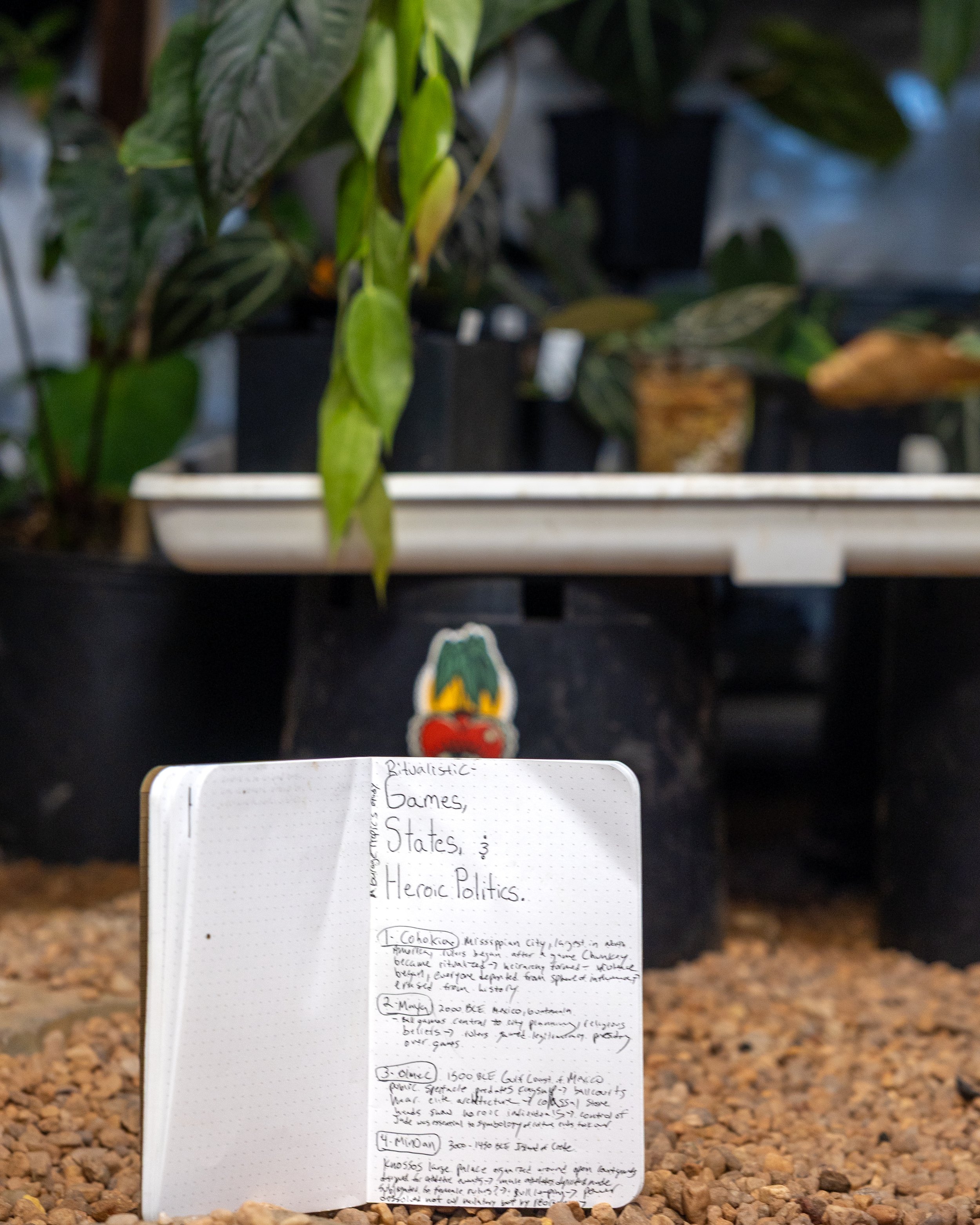
Notes, December 2025
Further reading: Graeber, David, and David Wengrow. The Dawn of Everything: A New History of Humanity. Farrar, Straus and Giroux, 2021.