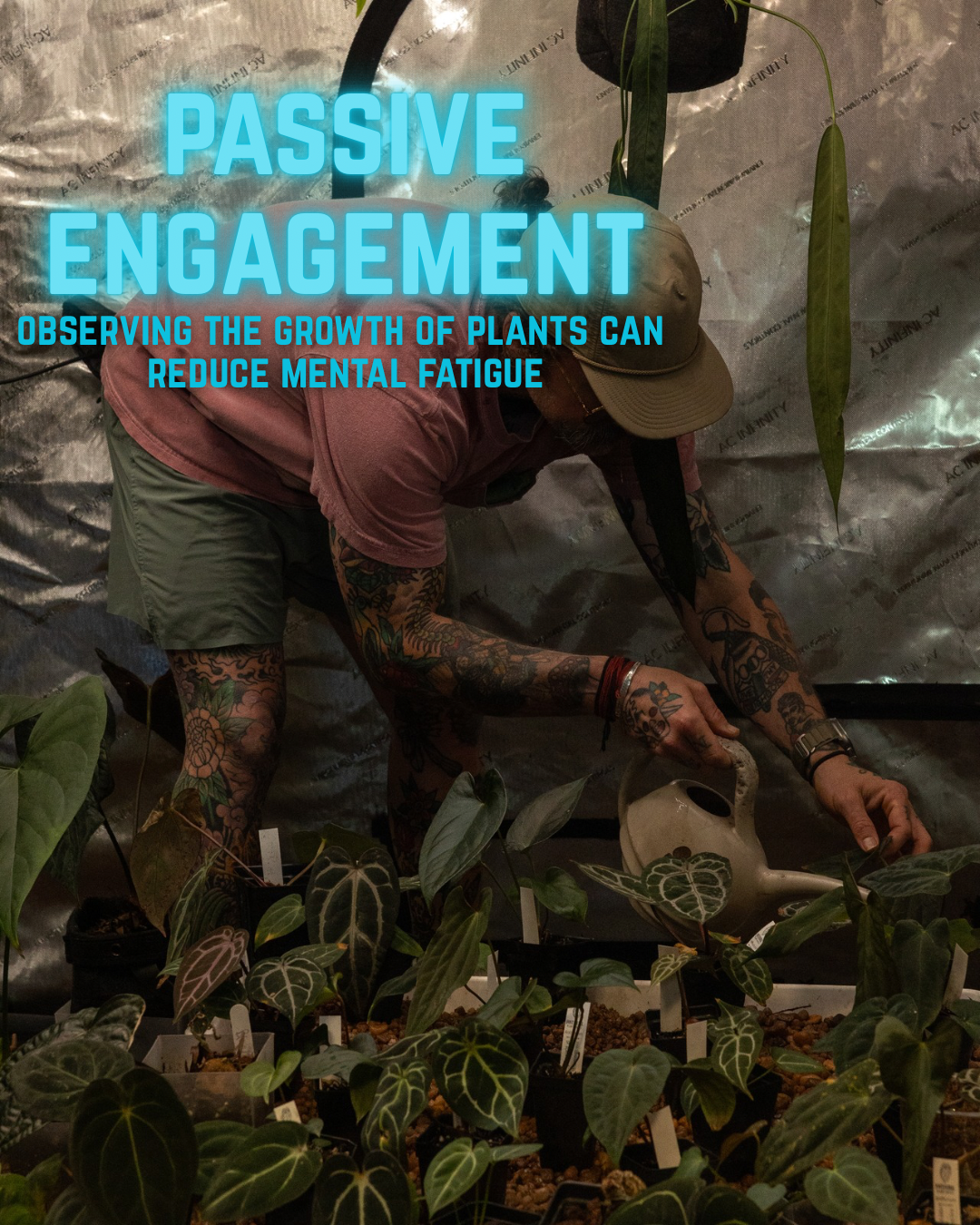
What Mother Nature Knew— the Grow Tent Fulfilled.
The people designing your social media feed are among the highest-paid problem-solvers alive.
Their singular metric is attention — capturing it, holding it, redirecting it before you realize it’s gone.
The average person now navigates dozens of these systems daily, each one optimized by teams with more behavioral data on you than you have on yourself. Directed attention — the focused, effortful kind — is the resource they’re strip-mining. And it is finite.
Rachel and Stephen Kaplan didn’t study smartphones. They spent decades studying why natural environments make people feel better, think more clearly, and recover from mental fatigue.
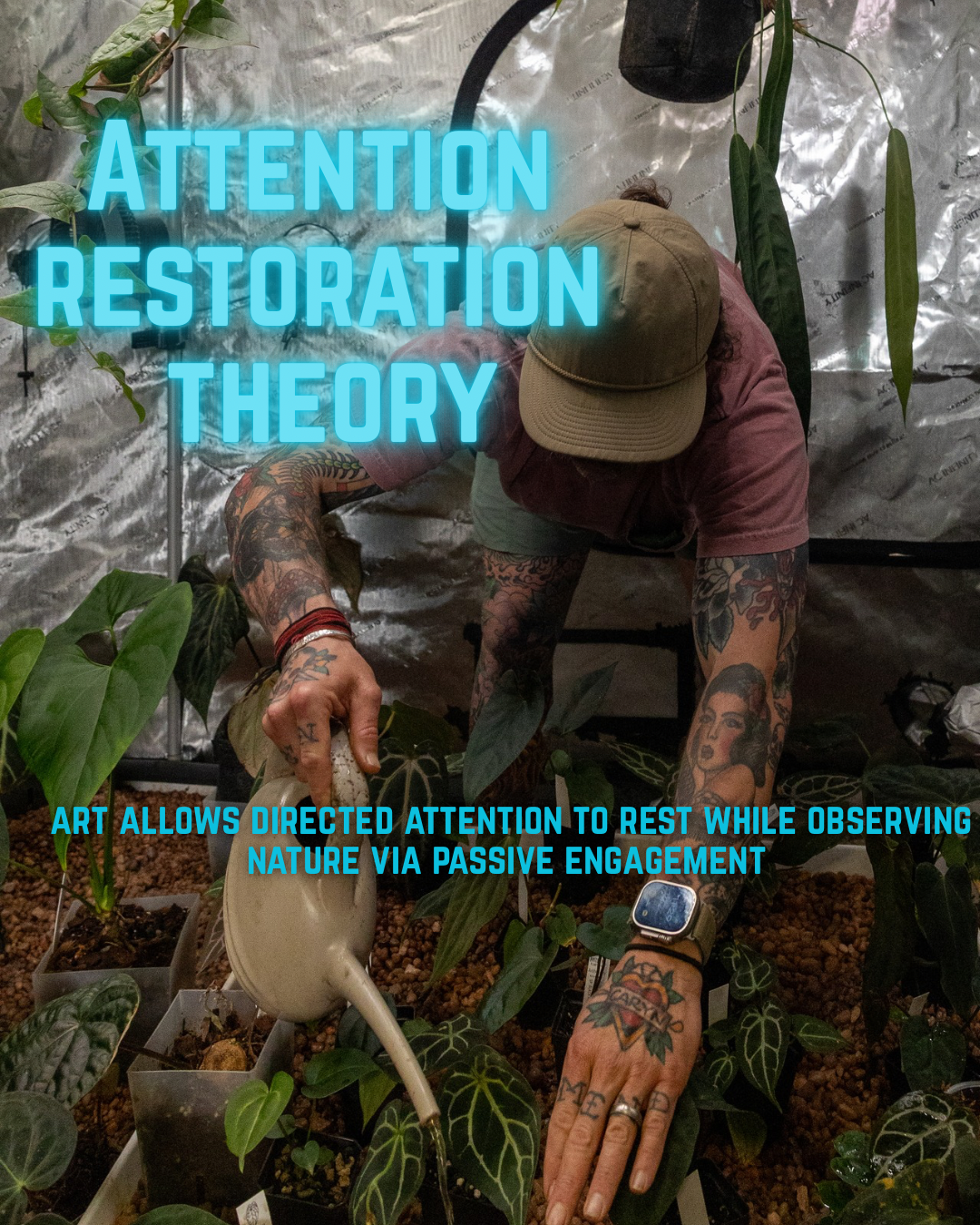
Their framework, Attention Restoration Theory, identifies what any restorative environment needs: psychological distance from your demands, enough richness to constitute its own world, effortless fascination, and compatibility with what you actually want to be doing. They published the core work in 1989.
The attention economy as we know it didn’t exist yet. But the antidote was already documented.
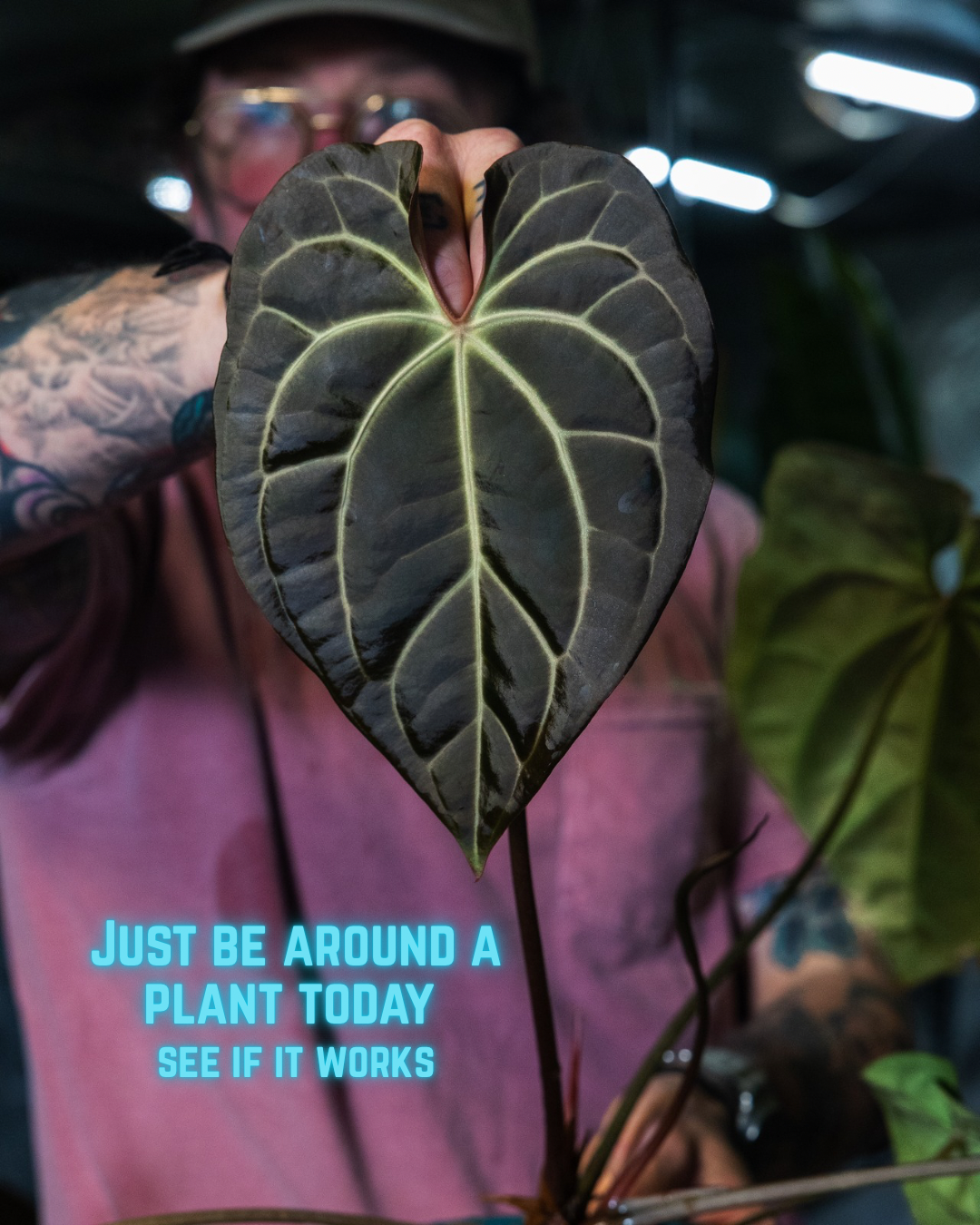
Plants produce soft fascination — the Kaplans’ term for stimulation that holds your attention without demanding it. A leaf unfurling. The geometry of venation. The way light moves through a canopy. These things engage the eye at precisely the frequency that lets directed attention recover. Nature didn’t evolve this to help you survive Instagram. But here we are.
I keep plants because I love them — their biology, their provenance, their strangeness. But I stay with them longer than any practical reason explains, and the Kaplans are why. You don’t need a greenhouse. You don’t need a collection. You need something alive, something that changes slowly, and enough quiet to notice it. The infrastructure for restoring your attention has been sitting on windowsills for centuries. It just never had a marketing budget.