No Dark Ages
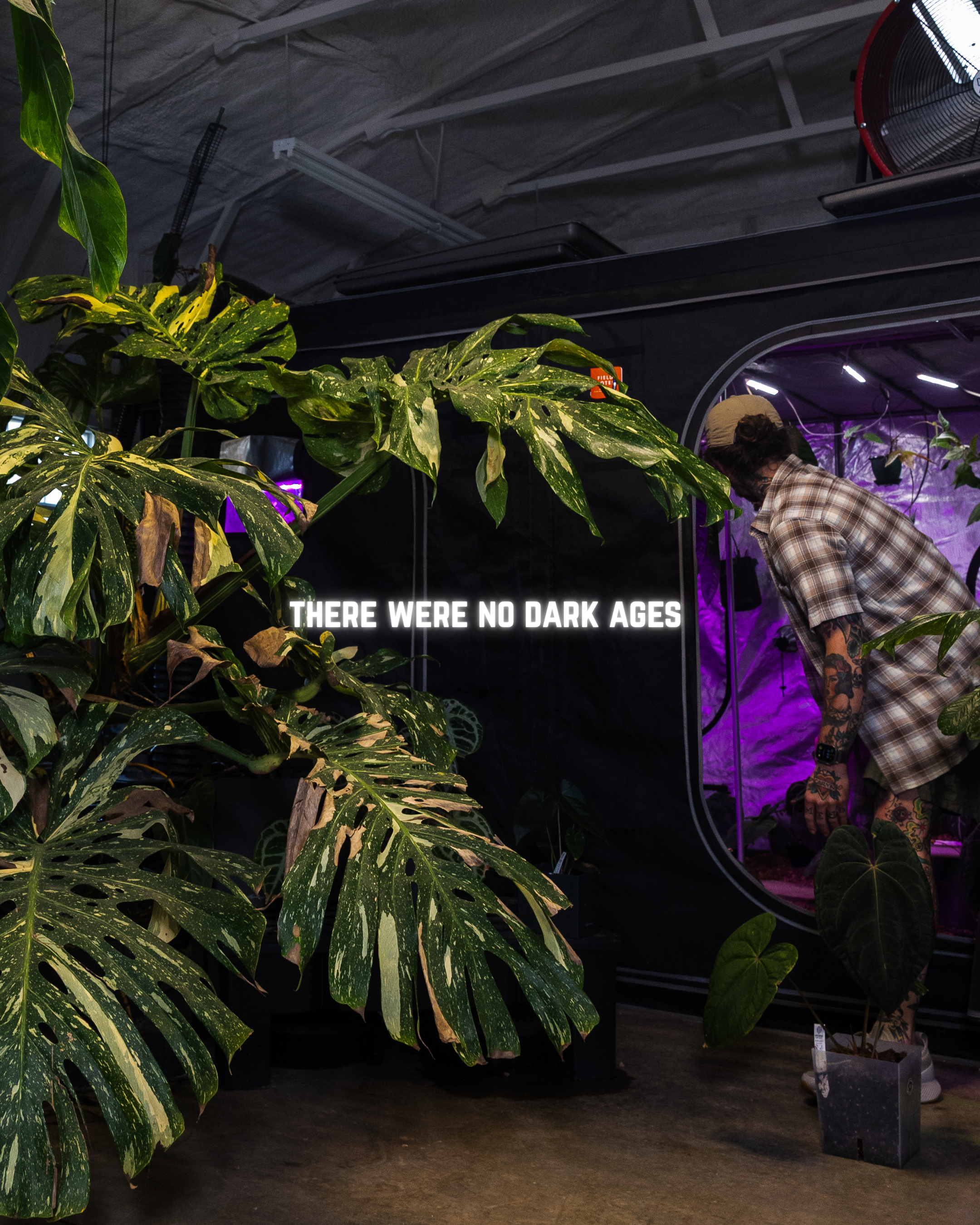
Not a botanical garden, but giant plants live here.
Sometimes things grow in places and are never recorded. That's not absence — that's bad PR from whoever wasn't there to write it down.
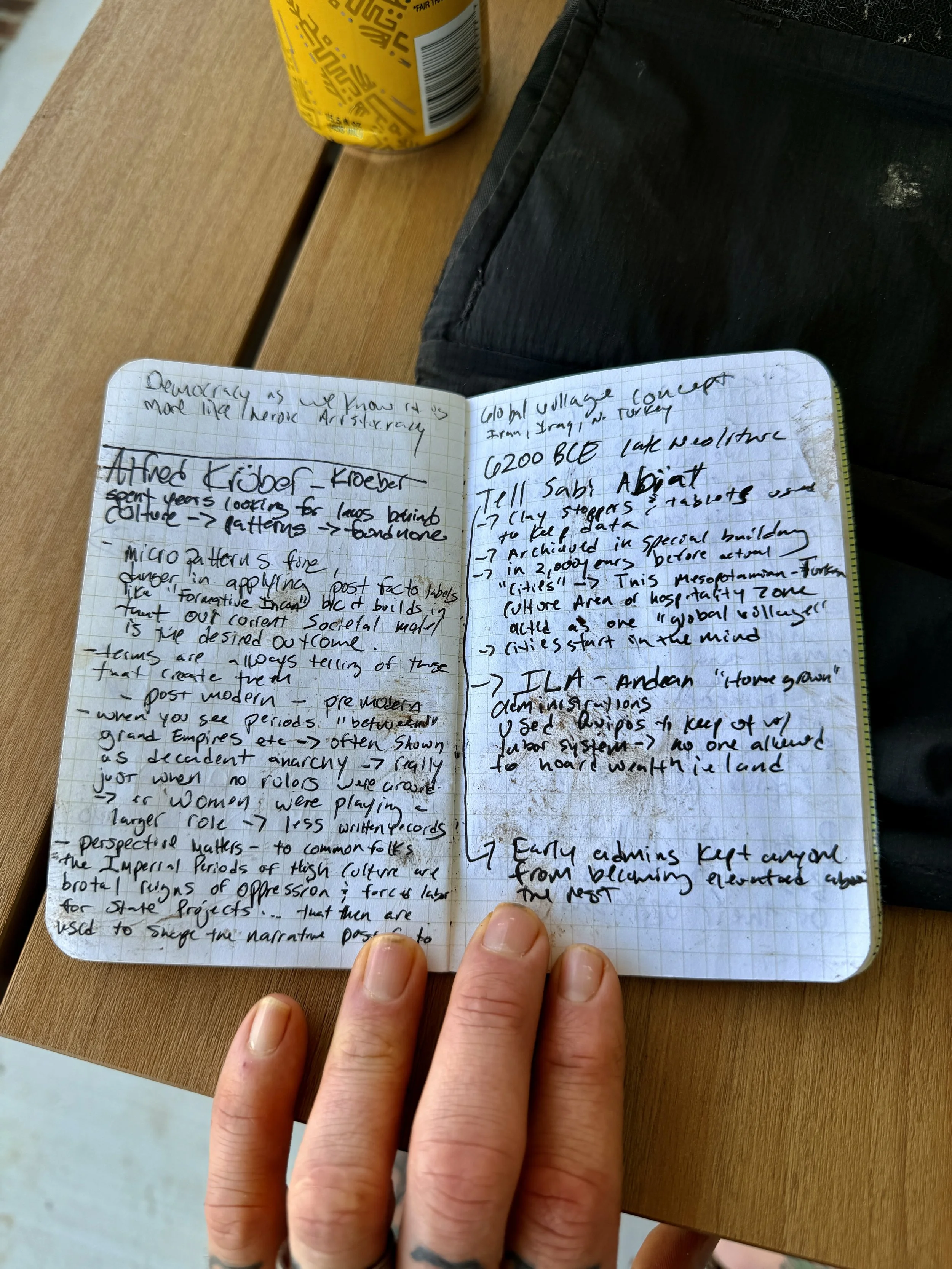
Alfred Kroeber was one of the most rigorous cultural anthropologists of the 20th century. He spent the better part of his career searching for universal laws underlying human cultural development: patterns that would explain why civilizations rise, plateau, collapse. He found micropatterns. Local coherence. Nothing universal. What he did find was that the frameworks we apply retroactively: "Formative," "Classic," "Decline"; tell you more about the values of the people naming the periods than about the periods themselves. Terms are always telling of those who create them.
The botanical world has the same problem. Institutional collections —ABG, Singapore, Kew, Huntington, MOBOT the major neotropical research programs — functioned as the credentialed nodes of plant knowledge. What grew outside them largely didn't count.
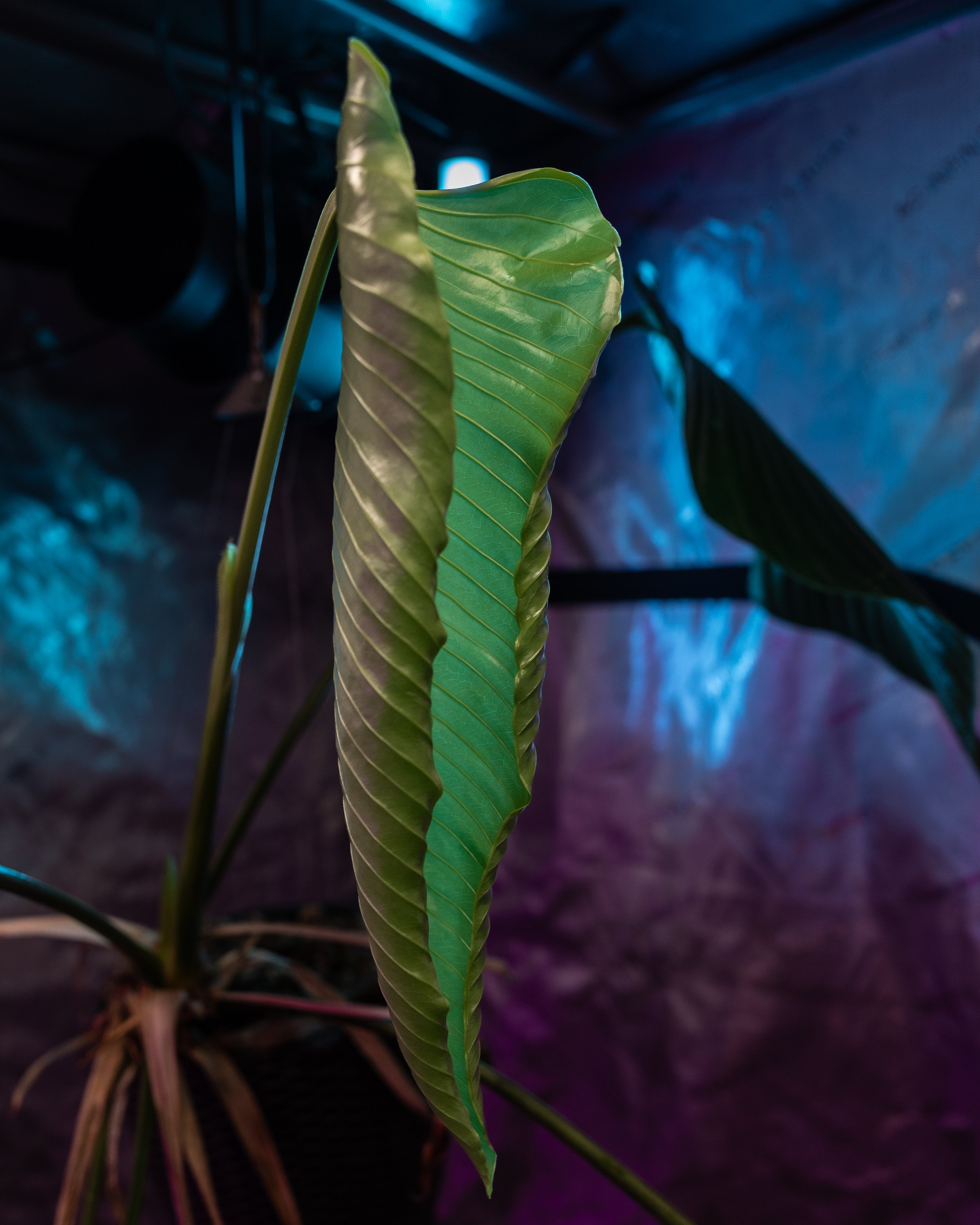
Anthurium nervatum
This Anthurium nervatum is pushing a new leaf in a grow tent in a garage in Lexington, North Carolina.
It's an F2 bred from material Jay Vannini developed with his Huntington Botanical Garden clone — wild-origin, research-collected seed stock.
I've grown it for five years in a mineral-based substrate as a controlled experiment.
There is not another specimen this size being grown indoors. Period.
Botanical gardens ain't the whole story. They never were.
Notes.
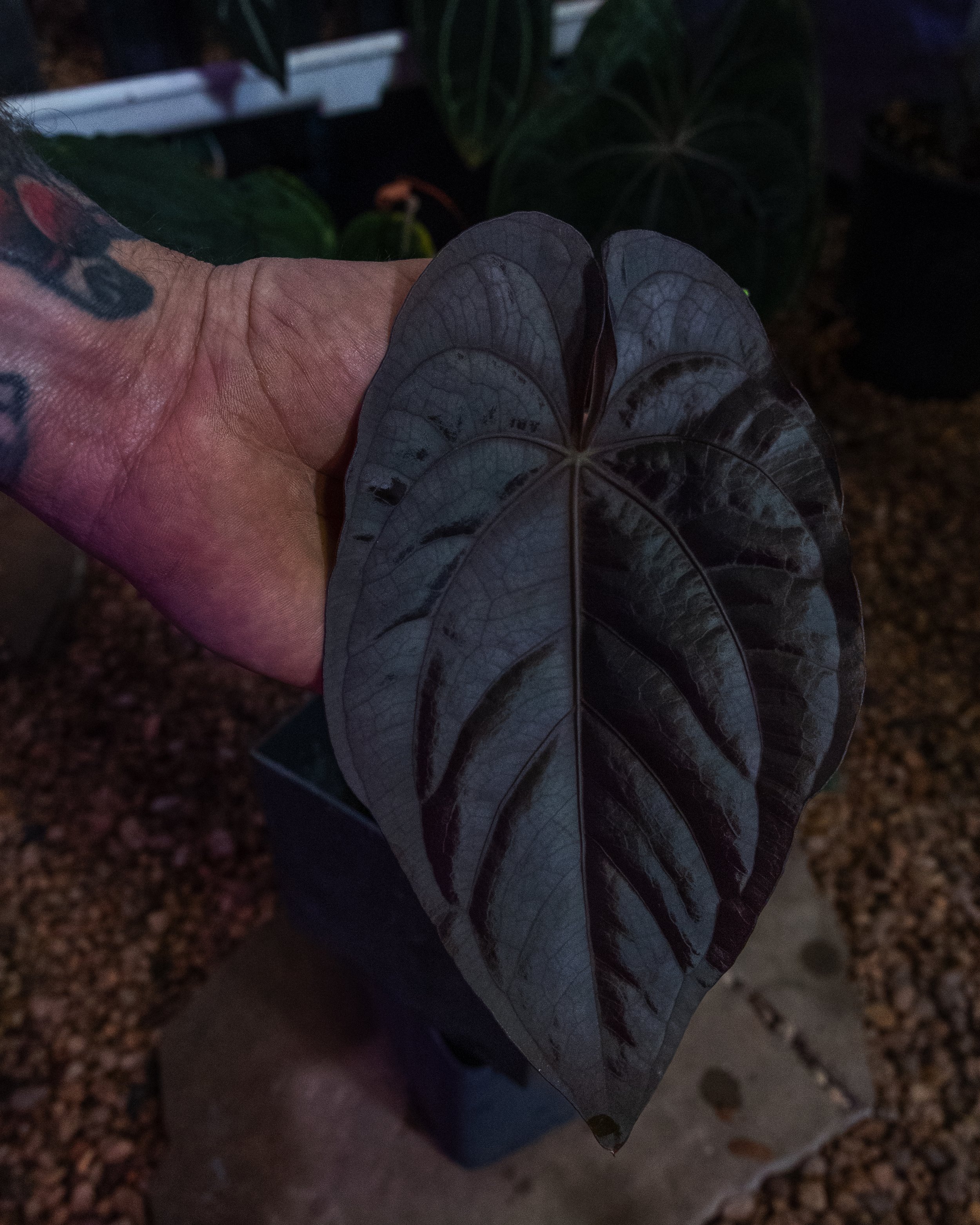
Neotropical darkness: Anthurium dressleri