
Print or Vanish. Athens, St. Anthony’s Fire, 48 pg notebooks, and getting your voice on the record.
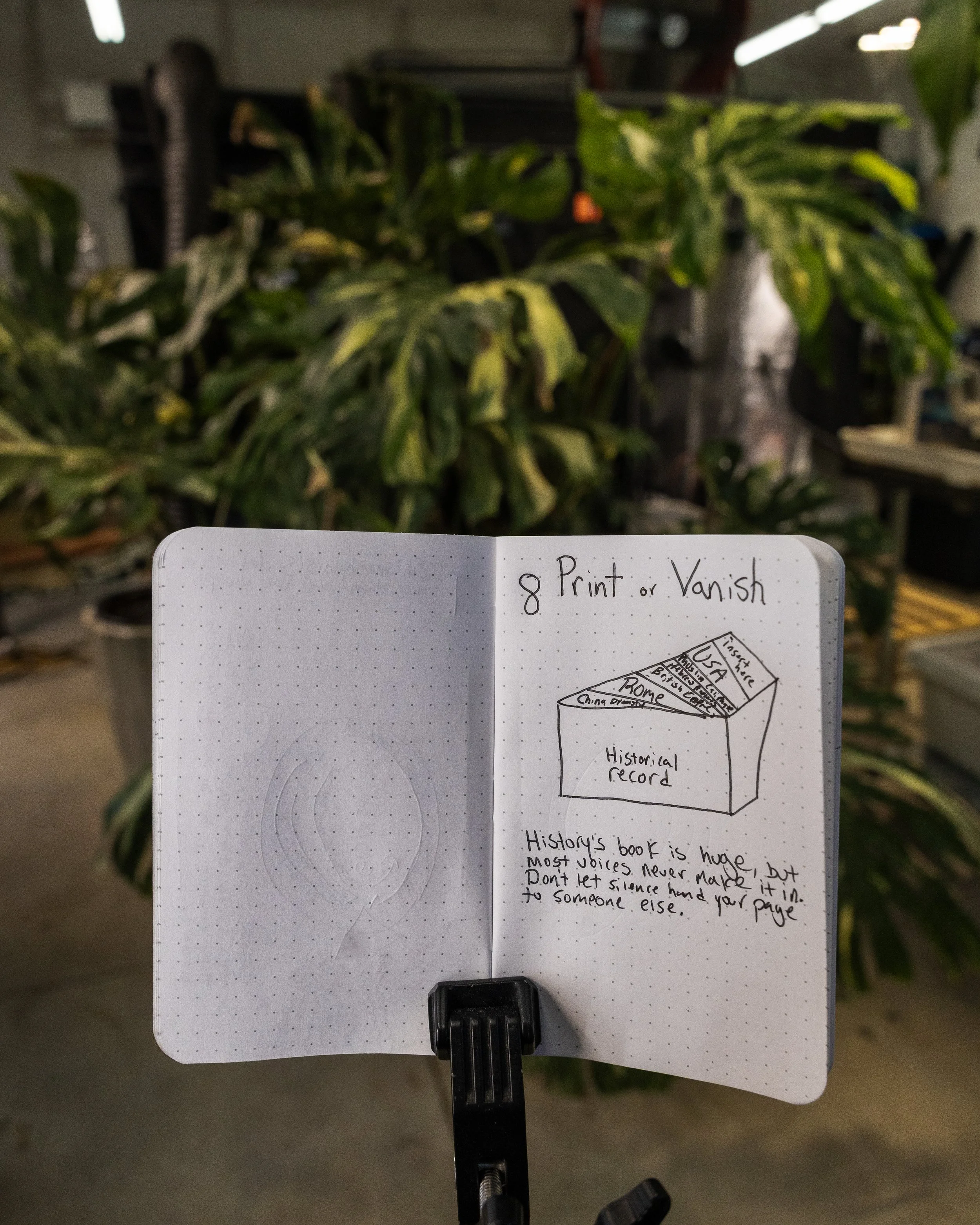
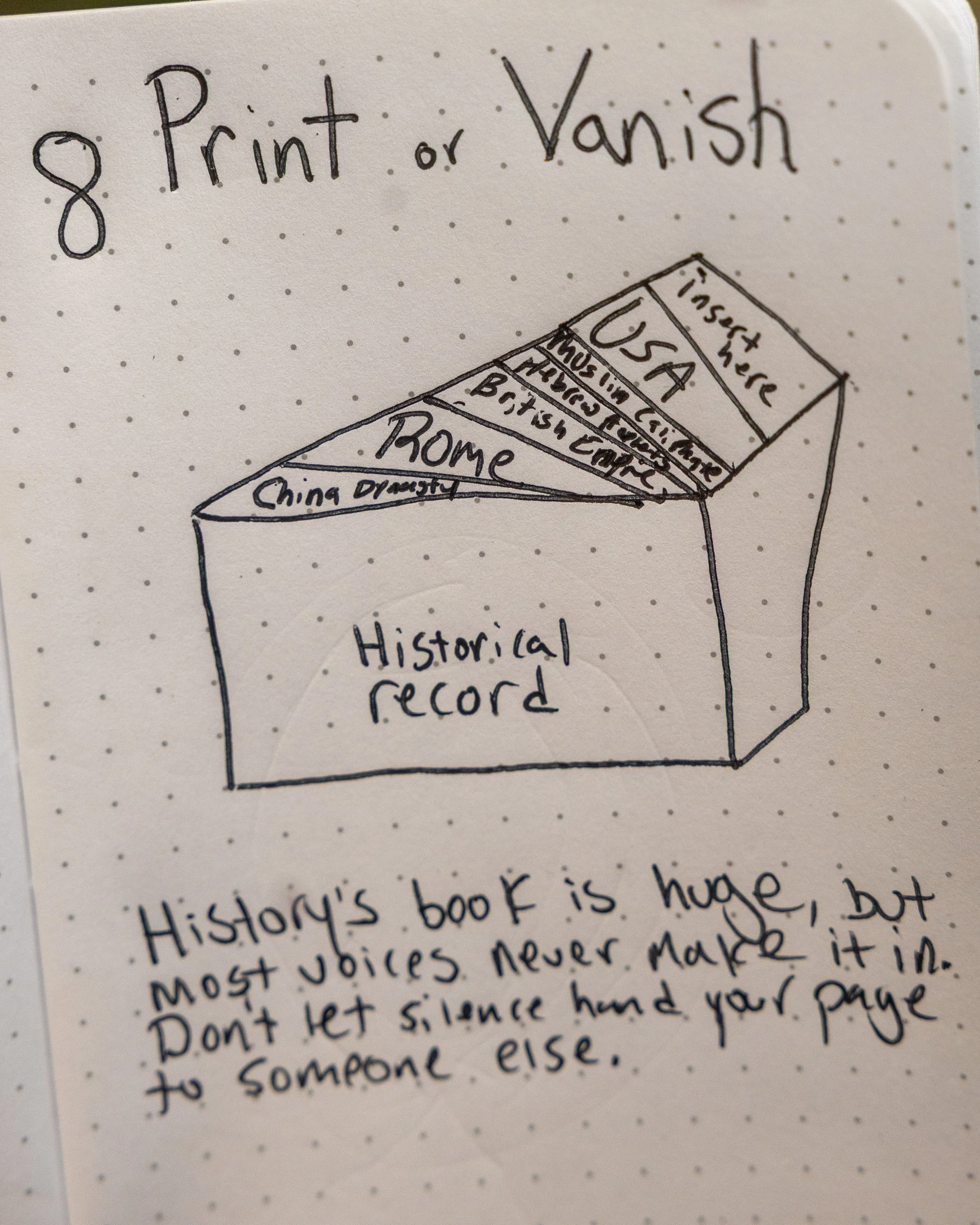
Hand drawn artifact created by an average type person in the year 2025. Part of a larger project to be released in print soon.
Athens Spoke, the Deltas Didn’t
Athens is remembered as the loudest city of the ancient world: temples gleaming, orators shouting, philosophers chiseling their words into history. But Athens didn’t feed itself. The grain came from the Black Sea deltas, fertile Holocene wetlands farmed by communities who lived and worked just as hard as any Athenian.
And yet we don’t remember them. Their names, their myths, their ideas are mostly gone. Why? Because Athens printed itself into marble and papyrus while the delta voices never made it past the fields. The city had ego, ambition- rajas- enough to shape the record. The deltas did not value this same set of parameters. Perhaps they valued authenticity, equanimity of mind, or maybe showing off was a real turn off to sexual partners thus people were more private, whatever the case the Black Sea Holocene saw an abundance of civilizational wealth but we just never hear about it.. this doesn’t make them less successful; just silent. This silence comes with a cost: the colonizers get to be responsible for transmitting the nuance of a lifestyle-culture-ethos that could have developed in direct opposition to theirs. History needs more voices not less. Of course theatre and democracy are dope, but what cool concepts are buried in the silt of the Black Sea region?
Write your stuff down.
Münster: Printing in the Firestorm
The same pattern played out in 1500s Münster. Ordinary men like Bernhard Knipperdolling and Bernhard Rothmann weren’t official theologians of empire; they were restless voices in the middle of religious upheaval. But they printed. Their pamphlets fanned out through towns and taverns, turning chaos into movement.
Add in the backdrop of Europe’s madness: outbreaks of St. Anthony’s Fire from ergot poisoning, visions and delirium running through villages, and you can see why words caught fire so quickly. The printing press was tinder in a drought.
Luther’s Too-Big-to-Fail Mindset
Martin Luther understood the press even better. His ideas were dangerous, but he printed them relentlessly, flooding the streets with cheap pamphlets. By the time the Church tried to silence him, it was too late. The ideas were already everywhere, too big to fail.
Fertile Grounds: Salons and Secret Societies
And this wasn’t just a Western thing. History shows us that intellectual powerhouses often emerge from fertile circles, not lone geniuses.
In France, the salons: smoky rooms where philosophers, poets, and scientists sparred over ideas, trading fragments that would become the Enlightenment. In Serbia, the Black Hand: conspirators and thinkers whose underground meetings grew into movements with geopolitical shockwaves. In Japan, the Cherry Blossom Society: a circle of radical young officers, students, and writers, where national destiny was debated over tea and manifestos.
Maybe imagine we are in those intellectual breeding grounds: imbibing, synthesizing, perhaps you had a great counter point, or a nuanced quirky amendment to a key ideological frame- sure it wasn’t the core concept, but you didn’t speak up or ensure it was written-maybe you’d have had to stand your ground or be louder than the next person…
Most of the names from those rooms are forgotten. But the atmosphere they created was dense with possibility, and a few with enough ego, enough rajas, carried pieces of that atmosphere into the record. Those are the names we remember.
Rajas and the Record
That’s the throughline: fertile places, wild ideas, but only a handful ever make it onto paper with the stubbornness to last.
And that’s where ego comes in. From a Western lens, ego sounds ugly. But in truth it’s just rajas: the restless energy that makes you move. Without it, ideas die where they’re born. With it, they stand a chance of surviving the trample of history.
I’ve met people with brilliant ideas. I’m one of them. But if I’m honest, I only transmit a sliver of my own into anything real; and almost none of it in print. That’s the next move. Because posting captions isn’t the same. That’s an ad for someone else’s platform. The real act is to artifact your thought, to carve it into the record in a way that stands alone.
For me, that means 48 facts from my notebooks. Maybe ten copies, maybe 150. Doesn’t matter. What matters is that they’ll exist. That I’ll have been motivated enough, egotistical enough, alive enough to make them artifacts.
Because cool people’s ideas get trampled all the time. Don’t let yours